Saturday, May 9, 2020

It Can't Happen Here


A celebrity is elected president of the United States.  What could go wrong?

Wait, what do you think I'm talking about?  I'm talking about the Philip Roth novel, The Plot Against America.  In an alternate version of history, Charles Lindbergh, aviator hero, running on an isolationist platform, beats F.D.R. in 1940. 

What happens to the United States?  What happens to the lives of the Roth family in Weequahic, New Jersey?  Federal programs like OAA (the Office of American Absorption) takes young Jewish children out of their urban homes and sends them to the heartland.  The Homestead 42 program relocates Jewish families to the south and midwest.  You know, so they can "learn more about America."  If this sounds disturbingly anti-Semitic, that's the point.

I haven't watched the HBO miniseries because I wanted to read the novel first.  The writing is sublime, the prose is glorious.  But The Plot Against America is also unsettling, terrifying, and whew, thank God it's fiction.  Unless... maybe it's not.

The postscript at the end of book includes a bibliography, a chronology of major figures, and a speech by Lindbergh given in Des Moines on September 11, 1941.


Wednesday, February 1, 2017

History

"Your birthday is April 15th, that's the day the Titanic sank," my mother told me.  I don't know how old I was at the time, but there's a chance it was the day I was born.  I'm not kidding.

My parents loved history - they met working for a newspaper and later my father became a high school history teacher.  They were both big readers.  I remember going to the library on Tuesdays and Saturdays with my mother carrying a large basket, big enough so we could take home seven books each.

They were always reading.  Newspapers and novels, non-fiction books, dozens of magazines.  And growing up in Virginia, we schlepped to monuments and sites of historical significance.  "Here's the farm where Cyrus McCormick invented the reaper!" or "Let's visit Monticello again!"

Did my mother try to delay her labor so I would be born on a day associated with so much history (the Titanic sinking, income tax day, Lincoln's death)?  We'll never know (I'm sure she did).  But my parents began to tell me about the Titanic.  It was considered unsinkable, but hit an iceberg on her maiden voyage and there weren't enough lifeboats available for the passengers and crew.  700 people were saved, but 1,500 perished.

I became obsessed.  The first "grown-up" book I read was about the sinking of the Titanic - A Night to Remember by Walter Lord.  I checked it out from the library so many times my parents gave me my own copy on my 11th birthday.  Walter Lord's storytelling threw you into the action.  You felt as if you were there on the deck, emergency rockets flashing in the sky.  Or freezing in a lifeboat, listening to people screaming in the water, watching as the lights on the ship went out and the great ship slid into the water, disappearing from sight.  You could flip to the back of the book and check the passenger list - the passengers who were saved had their names in italics. 

For years I would tell everyone my favorite writer was Walter Lord.  When I met my husband, I mentioned A Night to Remember and he said his favorite Walter Lord book was Day of Infamy, about Pearl Harbor.  I've read most of Walter Lord's books, including Incredible Victory, about the Battle of Midway, and The Night Lives On, a sequel to A Night to Remember.  Walter Lord (and my parents) helped me fall in love with history.  He made history seem alive, not just words on a page - he wrote about people.

Walter Lord passed away in 2002.  Jenny Lawrence, a family friend, complied some of his unpublished talks and a manuscript she had transcribed from tape recordings of his reminiscences in a wonderful book called The Way It Was, Walter Lord on His Life and Books.  Walter Lord's life was as interesting as his books.  He was in the OSS, for example.  In the book, he talks about how he came to write each book - we read about the history of his histories.

When I was eleven, I wrote him a fan letter about A Night to Remember.  "Dear Mr. Lord," I said.  "My birthday is April 15th."  He wrote me back. 


Monday, October 10, 2016

Hope

I skipped the second debate.  Instead I changed the channel to TCM to watch Frankenstein Meets the Wolfman.  And maybe that makes me a coward, but the negativity and hate and lack of respect in this election process has made part of my brain shut down.  So an old Universal monster movie, that was easier viewing.

Pastrix isn't what you'd call easier reading, but it's like a balm to soothe temperaments tormented by politics.  (The word pastrix is a derogatory term used for female pastors.)  The timing is exactly right to read a book that says, "Whew, people are good after all." 

Pastrix: the Cranky, Beautiful Faith of a Sinner and Saint is by Nadia Bolz-Weber, a Lutheran pastor in Denver.  Pastrix isn't what you think.  It's not preachy.  Or treacly.  Or written in deep incomprehensible theology.  You won't find mega-churches or squeaky clean, movie star handsome Jesus in this book. 

It's funny.  The first line of the book: "Shit," I thought to myself, "I'm going to be late to New Testament class."

It's also profound.  Bolz-Weber is a recovering alcoholic, an unlikely pastor who is honest and profane and imperfect and best of all, human.  She's like us.  Just because she's a pastor doesn't give her a FastPass to God - she has doubts and questions like everybody else.

She doesn't try to proselytize - this is not a "do this and you'll be saved" kind of book.  It's about love and loss and rejection.  About looking for faith and finding it in places you'd never expect.  Second chances.  Third and four chances. 

If you're feeling overwhelmed these days, pick up Pastrix.  And read about hope. 


Sunday, August 21, 2016

Families

Ketchup is My Favorite Vegetable - say that out loud and I dare you not to smile.  On the cover, a photo of two cute boys who look so much alike they must be brothers.  One has his arm draped over his brother's shoulder and the younger boy is wearing (duh) a Heinz ketchup t-shirt.  And underneath the title, A Family Grows Up with Autism

The book sat on my desk for a few days.  I've known many families affected by autism or special needs children.  Maybe I should just check out the new Harry Potter book instead. 

No, I picked up Ketchup is My Favorite Vegetable and started to read.  And I couldn't put it down.  It's a beautiful book - yes, parts are painful, but Liane Kupferberg Carter writes with elegance, honesty, and humor.  I was amazed at the resilience of her family, their love and perseverance and most of all, Liane's autistic son Mickey, who you follow from birth to young adulthood.  By the end of Mickey's journey you want to shout, "Woo hoo!" 

Sometimes you feel sick when Mickey is bullied or takes a step back in his progress.  Or reading about Liane and her battles (such battles!) with school bureaucracies and finding proper therapies and therapists - she is a wonderful, fierce advocate - I kept thinking of her as Joan of Arc.  But she doesn't pretend to be saintly and that's another lovely thing about her memoir, the idea that life with an autistic child is sometimes overwhelmingly difficult and it's okay to admit that.  But then you take a deep breath and go on. 

One of the things I liked best about Ketchup is My Favorite Vegetable was learning how a family deals with an autistic child who ages out of schools and programs and therapies.  Then what?  What options are available to a young adult with autism?

I cried, but I also cheered.  And you will, too, when you read this book.  Woo hoo, Mickey. 


Tuesday, May 31, 2016

So You Want to Read About Eugenics?

Sometimes it would be easier if we only read fiction.  Happy fiction, books that take us to a place where we don't have to think.  We can fly, be kings or princesses, fall in love overnight.

Fluff.  Lots and lots of fluff.

Imbeciles: The Supreme Court, American Eugenics, and the Sterilization of Carrie Buck by Adam Cohen is not fluff.  Sadly it is non-fiction - a story of the history of the eugenics movement in the United States and a Supreme Court decision that led to the forced sterilization of a woman who was considered an imbecile - and as Supreme Court Justice Oliver Wendell Holmes famously declared, "Three generations of imbeciles are enough."

So at twenty-one, Carrie Buck was sterilized.  Were the three generations imbeciles?  Carrie, her mother, and Carrie's daughter Vivian, a product of rape, who was "tested" at eight months and found to be mentally defective?  Most likely not.  But they were poor and had no one to speak up for them.

The eugenics movement wanted to produce better human beings and what better way than by purifying the white race?  Eugenists produced a list of people who should be prevented from reproducing - including criminals, deviants, people with disabilities, including the deaf, blind, epileptics, people in the low range of I.Q. tests, as well as immigrants from non-Nordic countries.  This faux science led to over 60,000 forced sterilizations in the United States. 

And if sterilization couldn't keep the United States pure, the eugenics movement also helped set up immigration restrictions and quotas.  They were in place in the 1930s.  Otto Frank (father of Anne) wrote letters to U.S. officials begging to immigrate.  His letters went unanswered.  Hitler read books by eugenists and used portions in Mein Kampf.  Racial hygiene laws were put into terrible practice in Nazi Germany.  (Holmes's quote about "Three generations of imbeciles..." was used as a defense argument by Nazis at the Nuremberg trials.)

Reading this book wasn't easy.  Almost every page made me angry.  But it's an important subject and if you turn on the news these days, too familiar.  Building a wall.  Genetic modification that can lead to designer babies.

Take a chance on this book.  It may make you uneasy, but sometimes that's a good thing. 


Sunday, April 17, 2016

When a Book Moves You

Moves you isn't exactly right.  When a book blows your mind.  Blows your head off.  Makes you cry, makes you want to start reading it again from the beginning.  When you want to buy copies for your friends and say, "Read this, read this right now, what are you waiting for, I am so not kidding."

Seriously.  I am not kidding, have you started reading it yet?

I finished The Year of the Runaways by Sunjeev Sahota this afternoon.  Yes, I cried.  Partly because I didn't want it to be over, but also because the ending was so beautiful.

The Year of the Runaways is a novel about a group of immigrants from India who end up in England.  And I don't want to say much more than that -  immigration is a hot button issue and this book isn't about an "issue."  It's about people.  About life and families and dreams and faith.  The writing is simple, but like poetry in its simplicity.  You're transported, you're reminded why you love reading.  Why reading is magic. 

Buy this book.  Or ask me and I'll send you a copy.  But now I'm going to go back to read and savor the last chapter again.     


Saturday, March 26, 2016

Reading a (Mostly) Good Book About a Bad (But Talented) Person

Frank Sinatra wasn't Joseph Stalin bad.  But he was a jerk.  An awful guy.  Insanely arrogant, he treated women horribly - actually he treated everybody pretty badly.  He was a bully, he slept with possibly thousands of women - he married Mia Farrow when he was 51 and she was 21.  Ew.  He liked to provoke fights and punch people (a lot easier to do when you travel with bodyguards - I mean, "friends").  

The mafia stories - did he use "connections" to sever his contract with Tommy Dorsey?  Did he use other connections to get his Academy Award-winning part in From Here to Eternity?  Was he the model for Johnny Fontane in The Godfather films?

Sinatra was a creep.  But also talented and he worked hard at his craft - music meant something to him and when he sings, you can hear that.  After I read part one of James Kaplan's biography, Frank: The Voice, I bought a best of Sinatra CD and even though - duh - I knew he was a great singer, I became more of a fan.  Listen to "I've Got the World on a String" or "Witchcraft."  See what you think.       

I've just finished Kaplan's sequel, Sinatra: The Chairman, and it was a good read in a sort of "National Enquirer" way.  Juicy and filled with gossip, maybe a little too juicy and filled with gossip.  But entertaining.  And I liked reading about the business of recording music - Sinatra's work with Nelson Riddle was especially interesting. 

It's a big fat book, over 900 pages, so I was surprised when it was 1971 and suddenly the book turns into a "Coda" where the last fifteen years of Sinatra's life are very condensed.  Too rushed and unexplored. 

So as a person - not so great.  But as a singer, as an artist - fly me to the moon, Mr. S. 


Wednesday, January 27, 2016

A Dot Ham

In 2004 I bought Alexander Hamilton, the biography by Ron Chernow.  It's a massive book, with 700-plus pages of text and I couldn't wait to read it.  Except - boy, it looked... massive.  So it sat on the shelf.  And sat. 

How interesting could the book be?  Alexander Hamilton - Founding Father, Secretary of the Treasury, his picture is on the ten dollar bill, killed in a duel with Aaron Burr. 

There you go, that's what I knew.  So why was the book so big? 

Years pass.  And suddenly there's a musical about him.  A musical about Alexander Hamilton?  Seriously?  What was I missing?  I bought the Hamilton CD and pulled the dusty book from the shelf. 

After reading Alexander Hamilton, it makes sense people didn't know much about him.  Hamilton wasn't especially popular.  After his early death he lacked a huge fan club to champion the many things he accomplished.  Instead he had people (including Jefferson and John Adams) criticize him and call him a monarchist and an aristocrat and a womanizer.  (Slightly strange coming from Jefferson - an aristocrat who had children with his slave and mistress, Sally Hemings.)

Hamilton wasn't perfect.  Brilliant, yes.  But also arrogant and bad-tempered and often too eager to speak his mind.  He did cheat on his wife and announced his infidelity by publishing a pamphlet, Observations on Certain Documents.  Good idea?  Not so much.

Hamilton's early years in the West Indies are Dickensian before Dickens existed.  His mother's morals were questionable, his paternity a mystery - was his father James Hamilton, black sheep of a wealthy Scottish family or Nevis merchant, Thomas Stevens?  And yet Hamilton manages to make it to New York and have tremendous success - he helped create a new nation, whoa, this orphan boy who came from nothing.  It's one of those books you read and say to yourself, "He did what?  Why didn't I know that?  He did that, too?  You're kidding.  This guy is amazing." 

The book is grand.  You're happy to finish it, but also wildly disappointed because you know whatever you read next won't measure up. 

And now I have to see the musical.  And read the book again.  And see the musical again.  Oh, dear.  This could go on and on. 

Do you understand the meaning of "A Dot Ham?"  If you've seen or heard the musical, you might.  There's a lyric in a song where Burr and Hamilton correspond with each other.  And A. Ham is Hamilton's signature.  Funny - it's the same signature as mine.


Here's a link to a Huffington Post piece I wrote about Hamilton the man, Hamilton the musical, and my hopeful possible genetic connection:

http://www.huffingtonpost.com/ann-lewis-hamilton/whats-your-name-man_b_9043314.html

Tuesday, December 15, 2015

Christmas Gift Ideas... and Endings

I have always been a fan of Robert Harris.  Fatherland (what if Hitler had won the war) is a novel I go back to and read again and again.  Hitler Diaries is also terrific - a nonfiction look at the famous Hitler Diaries - that turned out not to be written by Hitler.

Harris has also written novels about ancient Rome.  Pompeii, is like Chinatown set in Pompeii, just before the eruption of Vesuvius.  And he has written a trilogy about Cicero, focusing on Cicero's secretary/slave Tiro, who invented a system of shorthand (he also introduced the "&" symbol & and abbreviations like etc and e.g.).  The first book in the series is Imperium, the second is Conspirata and the third, Dictator, will be published in the U.S. in January 2016, but impatient me, I ordered it from Amazon.UK where it came out in the fall.  It's as good as the first two, but I was sad when I finished - it's like losing a friend when you get to the end of a series.

They should be read in order, but if you have a history buff on your Christmas list, Imperium would be a great start.

Ruth Rendell passed away this year and her last book, Dark Corners, was published posthumously.  I put off reading it because I knew when I was done, there would be no more from Ruth Rendell, one of the best mystery writers ever.  Dark Corners is about a bad tenant, a woman who lies about everything, a struggling novelist - typical Ruth Rendell, complex, filled with surprises, and moments that make you very uncomfortable.  She wrote more than fifty novels and seven books of short stories.  Her first book, From Doon With Death, introduced Inspector Wexford.  She also wrote novels under another name, Barbara Vine.  The first Barbara Vine was A Dark-Adapted Eye.

Dark Corners was very good, not my favorite (I was always a bigger fan of the Wexford books).  If you haven't read any Ruth Rendell or have a friend who hasn't, check her out.  Any of her books would make an excellent present.

Happy Holidays and hope you all receive a lot of books.


Thursday, November 19, 2015

So You Don't Want to Sleep Tonight?

While reading Ted Koppel's new non-fiction book, Lights Out, he mentions a novel I'd never heard about, One Second After, by Willam R. Forstchen.  Ted Koppel's book is scary - what would happen to the U.S. in the case of a cyberattack that knocks out our power grid?  Well, we'd be in big trouble because we're not prepared.  It's an excellent book and I highly recommend it.

But don't read it before bedtime.

Another book to skip at bedtime, One Second After, is a novel set in a small town in North Carolina.  Life is great.  Until an EMP (Electromagnetic Pulse) weapon is detonated, wiping out the electrical grid, computers, cars, cellphones, you name it.  How will our main character, college professor and retired military colonel, John Matherson, provide for his family, take care of his diabetic daughter, and help keep the town together?  Will food be rationed?  Should outsiders be allowed entry?  What do you do with looters?

The strength of the book is its smallness.  It's set in a college town with people who seem familiar - the doctor, the police chief, the college students Matherson teaches.  And suddenly everything that's normal - ice in your freezer, watching TV or listening to a radio, driving a car, air-conditioning, access to medicine - it's all gone.  Money becomes worthless - how do you buy something when the supermarket has nothing left?

One Second After isn't written especially well.  A lot of the writing is clunky and clumsy.  "Should of, would of" used over and over, that made me a little crazy.  You wonder if there was an editor for this book.  But I couldn't stop reading.  Who will survive?  And the bigger, more frightening fact - this could happen.  An EMP is real threat.  Are we set up to stop it?  And if we can't stop it, are we prepared for what to do next?

Yes, I highly recommend One Second After.  But like the Ted Koppel book, Lights Out, don't read it before you go to sleep.  Trust me. 


Thursday, October 22, 2015

Another Difficult Book

I don't know what made me order KL: A History of the Nazi Concentration
Camps
by Nikolaus Wachsmann.  Probably a good review and my love of
history and interest in World War II.  In high school I remember trying to
read The Rise and Fall of the Third Reich - I didn't get far, too dense.
(The book, not me.)  Later I read it in college and couldn't put it down
and naturally with my obsessive nature, had to devour everything by
William L. Shirer (Berlin Diary is a must-read).

KL is dense.  Almost 900 pages and over 600 pages of text.  It's heavy.  I
put it on the scale and it weighs almost three pounds.  Comprehensive, a
great amount of detail, excellent maps.  And as precise and clinical when
describing KL bureaucracy, Wachsmann is also able to connect us
emotionally to inmates through their letters and testimony after the war.
(Although far too many letter writers do not survive and only live on
through their writing.)

From simple, somewhat disorganized beginnings in 1933, the KLs (shorthand
for Konzentrationslager, concentration camp) were populated with mostly
criminals, communists, homosexuals, and "asocials."  It was surprising to
get deep into the book and realize how many of the inmates in the early
years weren't Jewish.  But that certainly changes.

And once it does the horror of the Holocaust becomes very evident in KL.  And
there are other horrors - as the treatment of Soviet POWs vividly
demonstrates.

At times I had to put down KL.  But KL is an important book.  It describes how
camps originally created to contain opponents to Hitler eventually
evolved into camps that practiced mass extermination.  Put the bureaucracy aside - 

how could human beings could treat each other like this?  How did people survive 
and go on with their lives after this experience?

There's a reason people say never again.  There's a reason people should
read books like this, even though they're not easy.


Wednesday, August 12, 2015

Read Me Now

I remember when Can't We Talk About Something More Pleasant? by Roz Chast came out.  The reviews were great.  I love Roz Chast, I've enjoyed her cartoons in the New Yorker for years.  So why didn't I buy the book?

Recently I was shopping at Barnes & Noble with my daughter, looking for a birthday present, a "funny" book for one of her friends who is... well, a little earnest.  I suggested David Sedaris (of course) and my daughter shook her head.  "She doesn't get irony," my daughter said.  When I spotted Can't We Talk About Something More Pleasant?, that seemed to have potential.  A graphic novel - hey, it's got pictures!

But a book about a middle-aged woman dealing with her aging parents, probably not great reading for an earnest, un-ironic eighteen year old.

However, it turned out to be perfect for me.

It's very very funny, very very moving.  Honest, engaging.  Painful at times.  Sometimes so difficult it makes you "bats," as Roz Chast says.  But a beautiful book that reminds us about how complicated it is to be part of a family. 


Wednesday, July 15, 2015

Parents


I just finished two books, both about parents.  Well... about parents, but the books are very different.  Bettyville is a memoir written by George Hodgman, who leaves New York City to return to his hometown, Paris, Missouri, to take care of his aging mother.  Hodgman, a gay man, has never felt like he belonged in Paris (Missouri) and his relationship with his mother is at times awkward, funny, and glorious.  Bettyville is about growing up, about how our parents raise us, and how they can be as imperfect as we are.  You will fall in love with Betty.  And her son, too.  It’s a beautiful book.  If you’re on Facebook, check out George Hodgman’s author page. 

Stalin’s Daughter: The Extraordinary and Tumultuous Life of Svetlana Alliluyeva by Rosemary Sullivan is also about a parent... if your parent happens to be Joseph Stalin.  Look at the cover of the book, do you feel a chill?  What would it be like to grow up with Stalin as your father?  Svetlana Alliluyeva's life wasn’t easy (not exactly a shock), she had several marriages, she defected and came to the United States, then went back to Russia – yes, extraordinary and tumultuous.  And Stalin as a parent?  Controlling, remote, abusive, although you realize that there were moments where he did love his daughter.  As Svetlana Alliluyeva grows up, she becomes more and more aware of who her father is and it's a horrible realization.  But in spite of everything, she survived.


Tuesday, June 16, 2015

Who Knew There was a Book?

There's a wonderfully quirky, scary, and sometimes romantic movie called Time After Time about H. G. Wells and Jack the Ripper.  In 1893, Jack the Ripper has taken a secret trip in Wells's time machine.  When Wells finds out, he takes a trip of his own - to bring back Jack.  Both men find themselves in contemporary (well, 1979) San Francisco where Jack resumes his killing spree and Wells tries desperately to stop him.

It's a delicious movie - watching Malcolm McDowell as Wells, the proper Englishman, finding himself almost a hundred years in the future.  Seeing cars for the first time.  Walking into a McDonald's ("Pomme frites!").  Meeting feminist Amy Robbins (Mary Steenburgen) and falling in love.  Anticipating utopia, but finding something else. 

When I looked on Wikipedia for information about the film, I was surprised to see it was based on a novel.  The unfinished novel was optioned by Nicholas Meyer, who wrote the screenplay and directed the movie as the novelist, Karl Alexander, completed the book.  The novel and movie both appeared in 1979. 

I've just finished the novel.  It's obviously a lot like the movie, but we spend more time in Wells's head (and in Jack the Ripper's creepy head, too) and learn in greater detail how Wells feels about the future - whoops, not exactly what he was expecting. 

There's a sequel that I haven't read yet - Jaclyn the Ripper.  Jack somehow turns into a woman who kills people (men?) in 2010 Los Angeles.  And, I'm guessing, as Wells and his new wife Amy, try to catch her.


Wednesday, April 29, 2015

Difficult Books


I couldn’t say I enjoyed reading One of Us: The Story of Anders Breivik and the Massacre in Norway by Åsne Seierstad.  Her book is about Anders Breivik, who in 2011 detonated a bomb outside the prime minister’s office in Oslo killing eight people and then made his way to Utøya, an island youth camp where he slowly and methodically shot and killed sixty-nine people, mostly teenagers.  Not exactly happy time reading. 

But a book I would highly recommend.  Why do tragedies like this happen?  We want to understand what could possibly make a person do something as horrible as a Columbine or the Aurora movie theatre shooting.  Or the massacre in Norway.  Reading about the pain and suffering of the victims and their families isn’t easy.  There were times when I had to put the book down and walk away from it.

 Ms. Seierstad is a well-known journalist and a wonderful writer.  There is a great deal of detail in One of Us – the lives of some of the victims as well as the sad life of Anders Breivik.  When Breivik was very young, his family was observed by the Centre for Child Care and Adolescent Psychiatry and it was suggested he be removed from his family and sent to stable foster care.  One of many "what ifs" that could have prevented the massacre.

The short prologue of the book takes place on Utøya where teenagers are fleeing from Breivik.  We don’t come back till that terrible day until page 272 (it’s 500+ pages).  By then we’ve met many of the victims and the prologue becomes clearer and even more heartbreaking.  One of Us is never exploitative and very respectful to everyone involved, including Breivik’s parents.  Yes, One of Us was a tough read, but in the end it felt like a tribute to the lives lost on that terrible day.    


Friday, April 10, 2015

Books That Surprise You - Sounds Crazy, No?


One of the best parts about reading is stumbling across a book and falling wildly, madly in love with it.

I had medium expectations for Wonder of Wonders, a Cultural History of Fiddler on the Roof by Alisa Solomon.  Yes, I like musical theatre (Stephen Sondheim is a god, btw), but a “cultural history?”  That sounded dry, like a failed thesis project.  I’d read a biography of Jerome Robbins, the choreographer/director, and I knew the musical (how did the bottles stay on the dancers’ heads during the bottle dance?  Because they better not fall off, that’s how), so why not give the book a chance?

Wonder of Wonders starts with Sholem-Aleichem, the great Yiddish writer, and explores the world of Yiddish theatre.  I knew a little about Sholem-Aleichem, but not much (okay, nothing) about Yiddish theatre.  And – go figure – it’s fascinating.  The book talks about the making of the Broadway show, but spends as much time talking about about culture and storytelling and the importance of keeping history alive. 

The book is beautifully written.  And parts made me cry – a chapter called “Fiddler While Brooklyn Burns,” about an inner-city school doing a mostly African-American and Hispanic production of Fiddler – amazing. 

Even if you’re not a musical fan, this is a book to read and savor.

"Here in our little village of Anatevka, you might say every one of us is a fiddler on the roof trying to scratch out a pleasant, simple tune without breaking his neck. It isn't easy. You may ask 'Why do we stay up there if it's so dangerous?' Well, we stay because Anatevka is our home. And how do we keep our balance? That I can tell you in one word: tradition!"


Monday, March 16, 2015

Looking for a Book to Read?


Over the weekend I was invited to participate in Authors on the Move, an event featuring 40 writers and over 250 guests getting together to eat and drink and raise money in support of the Sacramento Public Library’s Literary Foundation.  The evening was tons of fun and - woo hoo - over $100,000 was raised for the Library’s Summer Reading Program. 

I met many writers, but wanted to share information about my tablemates and their latest work. 

Jan Ellison’s debut novel is A Small Indiscretion, about a woman and her family and secrets in her past. 

Stephen D. Gutierrez has written three books – his latest is a collection of stories and essays, The Mexican Man in his Backyard. 

John C. Hampsey is from Pittsburgh (my father’s hometown) and his book, Kaufman’s Hill, is a memoir about Pittsburgh in the ‘60s.

The only regret I have is that I wasn’t able to meet more writers or buy more books.  So many books, so little time.  

But take a look at these and enjoy!


Friday, February 20, 2015

50 Shades of Blech

I never read 50 Shades of Grey.  But friends (thanks, friends!) insisted on reading parts of the book to me over the phone.  Or emailing especially poorly written passages.  Christian Grey using the word “incentivize,” for example.  Not to mention the gruelingly awful (I’m trying to channel E. L. James) sex scenes. 

I have a hard time with badly written novels.  After the first Twilight novel and several references to Edward’s “perfectly muscled chest,” I was done. 

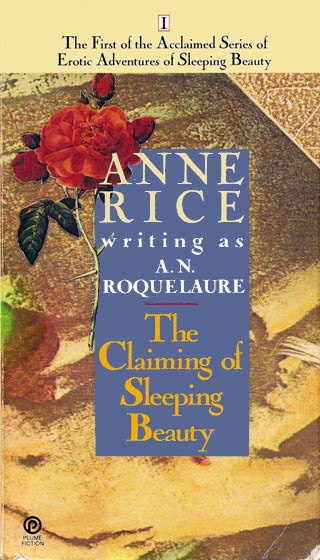
My experience with erotic fiction is limited.  Very limited.  Four books.  But they’re good and I recommend them.  The Story of O (do women still read that in college?).  Anne Rice (writing as A. N. Roquelaure) and her three Sleeping Beauty books are beautifully written.  Hardcore, not for the timid. 

Senta Holland’s Out of the Shadows surprised me because it’s a story about BDSM, but told with grace and real emotion.  It’s not an easy book to read, you have to let yourself fall into it.  

Yes, good erotic fiction exists.  Why settle for swill?


Wednesday, February 4, 2015

Nick Hornby, I Love You


Okay, I know you’re married and not available (yeah, I’m married, too, but I bet if I told my husband I was going to run off with you he might not mind too much – he’s a big fan of High Fidelity).  And we'd have a good time together.  I'd compliment you on your writing, bring you tea, learn to like bangers and mash.  Say "gobsmacked" all the time.  

But I’m not really in love with Nick Hornby.  I do love his books very much (Juliet, Naked - what a delicious read).  When a friend told me in December about Mr. Hornby’s latest novel, Funny Girl, I couldn’t wait to read it. 

Uh-oh.  Big problem.  It wasn’t available yet in the U.S.  Thank goodness for Amazon.co.uk. (Plus how cool is it to get a book that costs  £ 8.90?)  My copy of Funny Girl came before Christmas.  Ah, and it's glorious.  Mr. Hornby's prose is deceptively simple and accessible.  His words don’t get in the way, his writing isn’t self-conscious.  And there’s a realness and relatability (is that really a word?) to his characters – you know these people.  You might actually be like these people. 

Funny Girl is about a woman in the ‘60s who dreams of becoming a TV star, like her idol, Lucille Ball.  It’s funny, it’s moving, you will fall in love with Barbara Parker/Sophie Straw and the people around her.  And you'll have a grand time in the '60s.

(By the way, my last blog post was about a neglected TV show, It Takes a Choir - if you haven't checked it out, please do.  I'm not kidding about how good it is.  Available on Amazon.)


Thursday, January 15, 2015

Not About a Book - It Takes a Choir

I was planning to start the new year by talking about Funny Girl, the latest Nick Hornby novel.

But I'm going to wait.  Because recently I watched an extraordinary show on television and I bet you've never heard of it.

It Takes a Choir.  Ring a bell?  (Ha, that's funny.  Choir.  Ring a bell.)  Gareth Malone is an English choirmaster who did an excellent reality series in England a few years ago called The Choir, where he taught mostly non-singing students to participate in a choir where they eventually competed in the World Choir Games. How will they do?  Can they learn a song in a foreign language?  Perform in front of a live audience?

My husband and I read that there would be a U.S. version called It Takes a Choir.  We set our DVR.  And forgot about it.  Just before New Year's Eve we noticed that eight episodes of It Takes a Choir had been recorded.  Funny - we'd never seen any promotions or reviews of the show.  When I looked on Google,  I found out the series had been made in 2012 for the USA Network, but its release was continually delayed.  Finally all eight episodes were aired (aka "burned off") on a single day in December.  Luckily our DVR remembered.

We've watched three of the episodes - the first about military wives (and a few husbands) with spouses stationed overseas.  They're not singers.  Can Gareth bring them together and make them sound like a choir?  I admit I'm a big baby - somebody who cries at Folger's coffee commercials.  So it was no surprise when I sobbed my way through the episode.  The same with the other two we've seen.  Gareth Malone is so in love with singing and works hard to bring people together and teach them - he wants them to love music as much as he does.  There's an innocence to this show and not in a mawkish sort of way.  How often do you see something on television and feel genuinely moved?

It Takes a Choir is available on Amazon.  Give it a try.  "Bringin' Back Berwick" is a good episode.  And see if you don't cry when they sing "Let the River Run."  I dare you.